Optimism vs hope today
In local parlance: “She’ll be right” vs climbing into our biggest undies.

Human beings are largely wired to believe everything will turn out alright. In Aotearoa we actually say: “she’ll be right”. Indeed, human survival has always depended on an unwavering belief we’ll beat the odds1. Without a sense of pluck, no early Māori or European adventurer, or any other immigrant, would’ve crossed the Pacific to make a new life down under.
In my last post I shared the science of hope—an objective, plus pathways and agency.2 But there’s more to explore, especially the way hope and optimism differ:
While both expect a positive outcome, optimism doesn’t require us to do anything, whereas hope demands action. Lots of it. Aotearoa’s new arrivals couldn’t just optimistically sit around once they climbed off the waka (boat), could they?
Hope demands we truthfully assess our current situation—to help us figure out our objective and pathways to reach it.3 Optimism is too lazy or sticks its fingers in its ears to go “la, la, la”.
Honestly assessing our situation requires enormous courage. It makes us face hard truths; we might see things that shame, intimidate, or frighten us. But we have to. Otherwise, none of the pathways we identify to reach our objective will be realistic. We’ll nurture false hope.
Truthfully assessing our situation in 2024
Sustainability is an art that combines justice and practice with the best available science.4 To truthfully assess our situation in 2024, using science, it’s useful to look at the concept of Planetary Boundaries, developed by scientists through the Stockholm Resilience Centre.5
The Planetary Boundaries concept integrates data for nine critical Earth processes6, displaying them on an easy-to-read graph. The graph gives each Earth process, for instance, Climate Change, a boundary line.
Below each line is a safe operating space where humans can live laugh love without overwhelming Earth’s systems. If we cross the line, we “increase the risk of generating large-scale abrupt or irreversible environmental changes”7. The Planetary Boundaries graph clearly illustrates humanity’s sustainability objective—stay below the line.
Unfortunately, we’ve already crossed six of them. Significantly. See below.
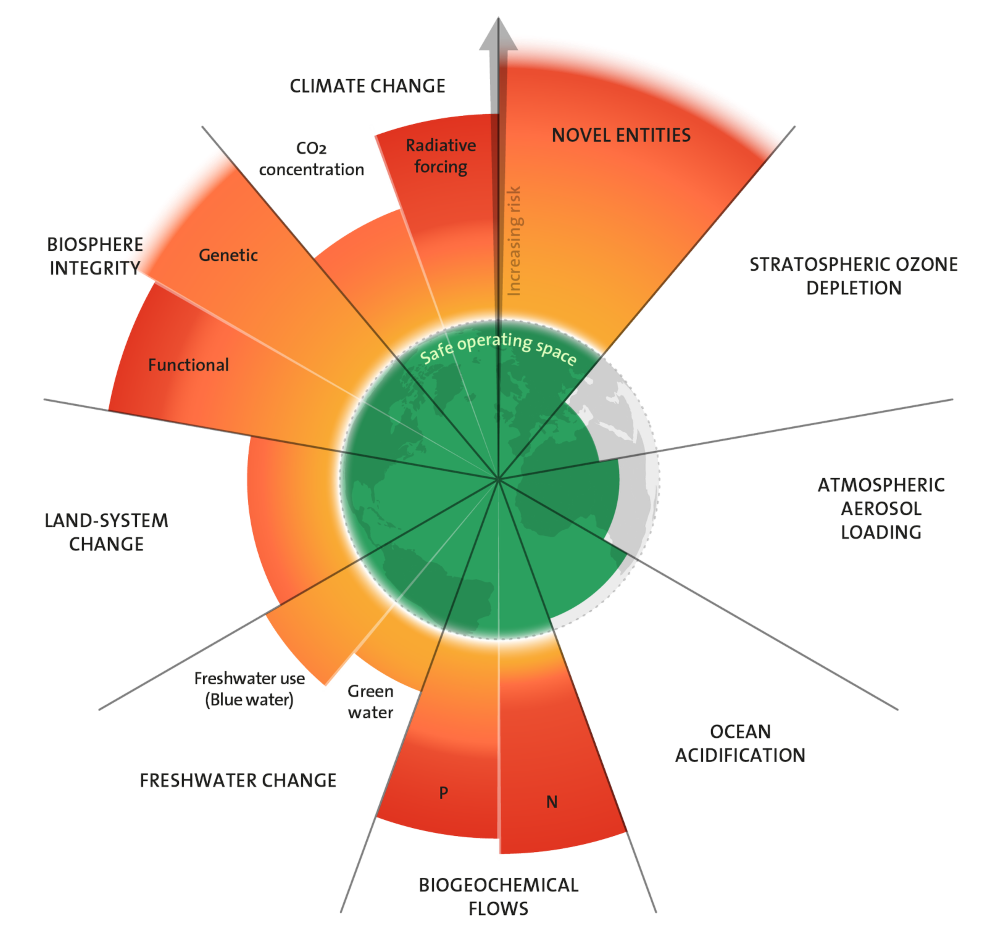
This is the moment we courageously climb into our biggest undies and sit with the hurt the science implies…
“Pain teaches us to take our fingers OUT the fucking fire”.8
Scientific data by itself is frightening. It doesn’t reassure us we have power to change things; it doesn’t communicate agency, which we need for hope. But healthy fear warns us to act, to change course. René Descartes even suggests hope needs fear:
“When hope is so strong that it altogether drives out fear, its nature changes and it becomes complacency ...”9.
Hope is serious business and seriously hard mahi (work). But armed with the science of hope, and after a truthful assessment of our current situation, we can start to envisage the future we want and figure out pathways to get there—together.
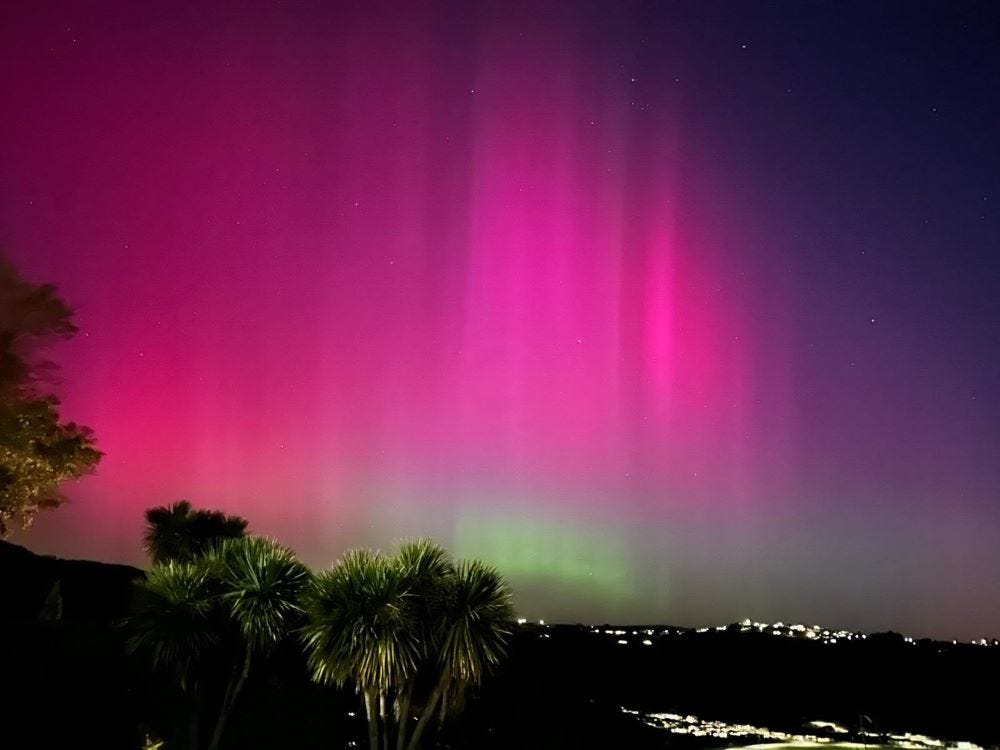
Tali Sharot is a cognitive neuroscientist who studies optimism bias. She summarises her thinking in this Time magazine article from 2011.
Hope is the belief that your future can be better than today, and you have the power to make it so. It’s a framework for action and its three main ingredients are an objective, pathways, and agency. To learn more, watch Dr Chan Hellman’s Tedx talk on the science and power of hope.
Radical hope, a book by Jonathan Lear.
Sustainability a book by Leslie Thiele.
The nine planetary boundaries were first proposed in 2009 by former centre director Johan Rockström along with 28 renowned scientists. Learn more here.
For example, a forest will easily absorb the CO2 of a small cooking fire. But cut down the forest and build a motorway full of petrol-fuelled cars? Suddenly the CO2 to be absorbed is overwhelming.
Poet Mary McAnally.
Thank you Vivienne, I love the way you are breaking these ideas down. It allows me to honestly reflect on my feelings and actions. I'm so glad you are writing in this space, to me it seems the crux of the issue, "how to sit with the hurt" as Jane says above, be honest about the situation, find agency and work for change - together! Brilliant! Perhaps, "She'll be right", mate, If enough people can engage in this way. xo
Hi Vivienne. Great post - seems wrong to say "I enjoyed reading it". I often wonder about why humans seem to be wired with so much optimism - to the point of apathy. Maybe it has been a survival mechanism in a way- to cope with our day to day situations, to make some of our developments and to 'evolve' as we have. I often wonder how I can 'shake' this off personally, to put priorities in their proper order. In Buddhism, one of our daily practices is to meditate 'I may die today'. It is not a morbid thinking, but a way to 'sit with the hurt' that we have no certainly that we won't die today, to connect with the value of our precious human life and to help guide our daily actions, focusing on what is important- don't sweat the small stuff. Sitting with the hurt is clearly the only way we will 'connect' with the data and it's projected outcomes for our planet. I guess all affected by climate change directly with floods and sea level rises are better able to do this already. This is why I follow your blog- to learn about the hurt and how to have constructive 'hope'. Thank you!